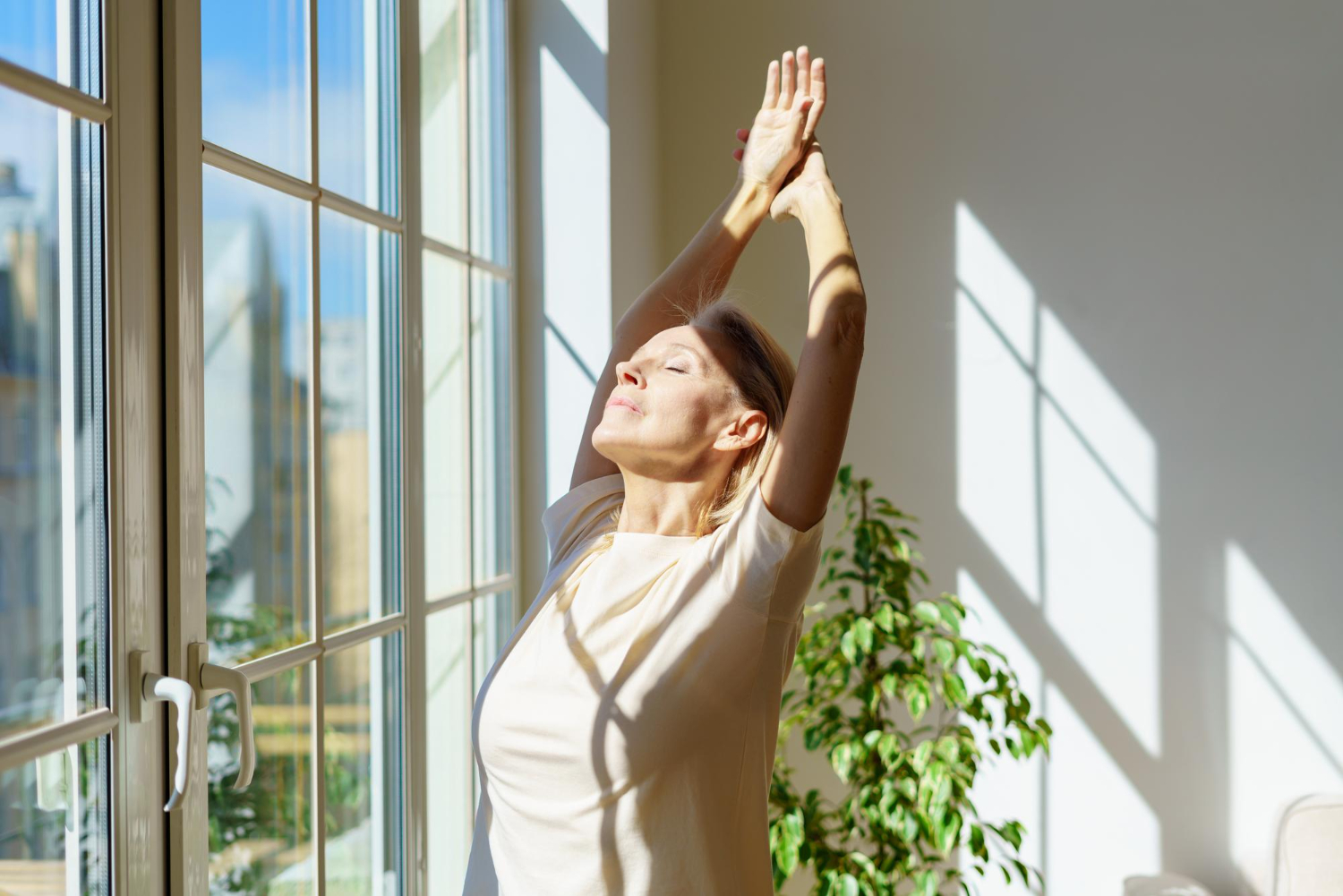

Some of the most meaningful signs that someone is becoming stronger do not look particularly dramatic. They may notice that getting out of a chair feels easier, they can carry their shopping with more confidence, climbing the stairs takes less effort or they can spend longer gardening before becoming tired. Occasionally, the change is simply that they no longer need to think quite so hard before doing something that had begun to feel difficult.
This is the kind of strength that interests me. It is not primarily about lifting the heaviest weight, changing how the body looks or keeping up with anyone else. It is about capability: helping us continue to do ordinary things, retain independence and preserve choices as we get older.
What do we mean by strength?
We often associate strength training with gyms, heavy weights and people who already feel fit. In reality, our muscles are working whenever we stand up, climb a step, carry a bag, push open a heavy door, reach overhead or lower ourselves carefully into a chair.
Strength is not quite the same as general movement or cardiovascular fitness. Walking, swimming and cycling have many benefits, but our muscles also need to work against some form of resistance. That resistance might come from our own body weight, a wall, a resistance band, a household object, a dumbbell or a piece of gym equipment.
The appropriate challenge will be different for different people. Standing up from a chair without using the hands may be routine for one person and a significant strength exercise for another. Neither version is more virtuous. What matters is finding a level that is challenging enough to encourage the body to adapt, while remaining manageable and appropriate for the person doing it.
Why strength becomes increasingly important
Muscle mass, strength and physical performance can decline as we age. The medical term sarcopenia describes a condition involving low muscle strength together with reduced muscle quantity or quality; poor physical performance indicates greater severity.[1] Sarcopenia is not simply the same as getting older, and it should not be self-diagnosed, but it helps explain why maintaining muscle function deserves attention.
The reassuring part is that older muscles remain adaptable. Research shows that resistance training can improve strength and physical function in older adults, including people with sarcopenia, although results vary and programmes need to be appropriate to the individual.[2][3]
Official UK guidance recommends muscle-strengthening activity on at least two days each week, alongside aerobic activity and reducing long periods of sitting.[4] That is a useful public-health target, but it should not become another stick with which to beat ourselves. If you are starting after illness, living with pain or fatigue, or have not exercised for some time, the sensible beginning may be smaller and more supported.
Strength protects everyday choices
We tend to notice strength most when we begin to lose it. A low sofa becomes awkward, a full kettle feels heavy, getting down to the floor seems less appealing because getting back up is uncertain, or we start relying on momentum to climb the stairs.
These changes can gradually narrow what feels possible. We may avoid particular tasks, stop going to places where we are unsure about the seating, or become more dependent on other people. This is why strength is closely connected to confidence and independence. It gives us more options.
The aim is not to guarantee that we will never need help. Bodies change, health conditions arise and support is sometimes both necessary and wise. Maintaining strength simply gives us a better physical foundation from which to meet those changes.
Strength is more than muscle size
Muscle size matters, but it is not the whole story. Strength also depends on how effectively the nervous system recruits and coordinates muscle, how confidently we approach a movement, the health of our joints and the opportunity we have had to practise the task.
This is one reason everyday function cannot be judged by appearance. A person may look slim or active but still find rising from the floor difficult. Someone in a larger or older body may be considerably stronger than assumptions suggest.
Simple assessments such as chair-rise ability, walking speed and grip strength are used in research and healthcare because they can provide useful information about physical function. They are indicators, not competitions and not a verdict on anyone's future. Repeatedly performing a test does not itself guarantee a longer life; the important question is what the result may tell us about support, health or training needs.
What counts as strength work?
Strength work can be much more varied than people expect. It could include:
- repeatedly rising from and returning to a chair
- pushing into a wall or pulling against a resistance band
- controlled heel raises while using support
- carrying an appropriately weighted bag in each hand
- stepping up onto a low step
- working with light weights or household objects
- moving slowly against the resistance of our own body
Some of these movements may not look traditionally “yoga-like”, but they serve a practical purpose. A carefully adapted yoga practice can include squatting patterns, pushing, pulling, weight-bearing through the arms, balance work and controlled transitions. The value lies not in how impressive a position looks, but in what it helps the body learn to do.
Gardening, carrying shopping and other daily tasks can also challenge muscles, but they may not work the body evenly or progress in a predictable way. Deliberate strength practice lets us choose the movement, dose and support more thoughtfully.
Starting when your body has other ideas
Advice about building strength can feel alienating when you live with arthritis, persistent pain, fatigue, osteoporosis, hypermobility, a neurological condition or reduced mobility. Standard exercises may not suit your joints, energy, balance or confidence. Symptoms may also fluctuate, making a fixed programme difficult to follow.
Adaptation is not cheating. It is how we make a practice possible.
That might mean using a chair or wall, changing the range of movement, reducing resistance, doing fewer repetitions, allowing more recovery or working on one part of a movement before putting it together. Someone who cannot comfortably get down to the floor can still strengthen their legs, hips, back, arms and shoulders while seated or standing with support.
Pain during exercise is not always straightforward, particularly for people with persistent pain. “No pain, no gain” is not a useful rule. Equally, the complete absence of sensation is not necessarily the aim. A physiotherapist, appropriately qualified exercise professional or healthcare practitioner can help if you are unsure what is safe, have a recent injury, experience unexplained symptoms or need condition-specific guidance.
Consistency matters more than perfection
Strength develops when muscles are given an appropriate challenge and enough opportunity to recover and adapt. Over time, that challenge may need to increase, perhaps through a little more resistance, another repetition, a slower movement or less reliance on support.
This progression does not need to be aggressive. Small amounts of resistance work can still be useful, and research suggests even relatively low training volumes may improve aspects of physical function in healthy older adults.[5]
The hardest part is often not understanding an exercise but finding a way to keep doing it. A short practice linked to an existing routine may be more sustainable than an ambitious plan that depends on ideal energy, lots of equipment and a free hour. Two or three carefully chosen movements can be a genuine beginning.
As I often say in class: do what you can. Sometimes that is just turning up. On another day, it may be adding a little more challenge. Both can belong to a consistent practice.
How Yoga and Yoga Therapy can help
A general yoga class can contribute to strength when poses and transitions are chosen and taught with that intention. Chair Yoga and Adaptive Yoga can also provide meaningful resistance and weight-bearing work; using support does not remove the work the muscles are doing.
Yoga Therapy offers a more personalised approach. We can begin with the tasks that matter to you, consider your health, pain, energy and confidence, and explore what may be limiting them. A practice might focus on rising from a chair, improving leg and hip strength, supporting the upper body, building tolerance for standing or becoming more confident with steps and floor transfers.
Yoga is not a replacement for specialist rehabilitation or medical treatment, and it will not prevent every age-related change. It can, however, provide an accessible way to practise strength alongside mobility, balance, breathing and rest.
Strong enough for the life you want to live
Healthy ageing is sometimes presented as a project to stop the body growing older. I prefer to think of it as supporting the body to continue participating in life.
The most useful question may not be “How strong should someone my age be?” but “What would I like my strength to help me do?” The answer might be travelling, playing with grandchildren, walking the dog, keeping up with the garden, managing stairs, continuing to work or simply feeling steadier and more capable at home.
Strength is not about proving anything. It is about keeping as many of those possibilities open as we reasonably can.
If you would like help finding an accessible way to build strength around pain, reduced mobility or a long-term condition, Infinite Harmony offers group classes and personalised Yoga Therapy in Basingstoke and online.
Explore your options: Infinite Harmony services
Evidence and editorial references
- Cruz-Jentoft AJ et al. Sarcopenia: revised European consensus on definition and diagnosis. Age and Ageing. 2019.
- Yan R et al. Optimal resistance training prescriptions to improve muscle strength, physical function, and muscle mass in older adults with sarcopenia. 2025.
- Zhou Y et al. Effects of resistance training on muscle mass, strength and physical function in older women with sarcopenia. 2026.
- UK Chief Medical Officers' physical activity guidelines. Updated 2026.
- Radaelli R et al. Effects of resistance training volume on physical function, lean body mass and muscle hypertrophy in healthy older adults. 2025.
Editorial note: This article provides general information and is not a substitute for individual medical or exercise advice.